
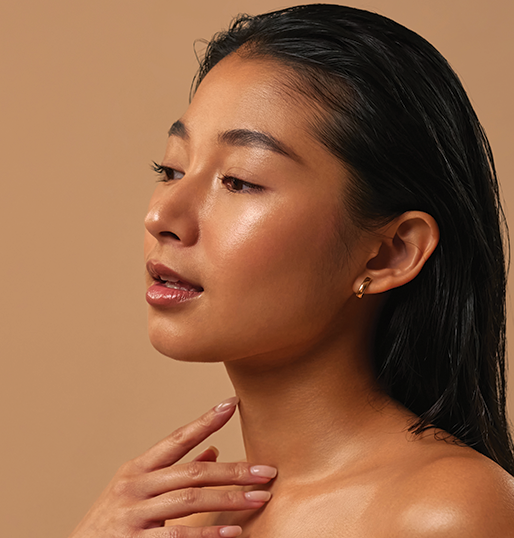

Alopecia is the medical term for hair loss. Hair loss can be seen in all ages and results from immune system dysfunction, infection, inflammatory skin disease, hormonal fluctuations, medications, or stressors such as surgery, post-partum recovery, and major life changes. Regardless of the cause, hair loss is a distressing and frustrating condition to navigate.
This type of alopecia appears as either a single or multiple round areas of hair loss. Immune cells attack hair follicles, resulting in non-scarring circular patches of hair loss in the scalp. Eyebrows and eyelashes can also be affected, and patients may notice changes to their fingernails.
Both men and women can experience this type of hair loss, which typically begins in the late teens to early thirties for men, and around menopause for women. Male pattern hair loss involves thinning at the top of the scalp in addition to a receding hairline. Female pattern hair loss often spares the hairline but results in decreased density along the center part.
This type of hair loss causes diffuse shedding of hair throughout the entire scalp. It begins suddenly about three months after a causative event, such as surgery, childbirth, significant weight loss, or medication. While this type of alopecia is not permanent, it can be quite anxiety-provoking due to its rapid onset.
Hair follicles can be stressed by the weight or tension of ponytails, extensions, dreadlocks, weaves, braids, and cornrows, resulting in thinning along the hairline or throughout the scalp. If these styles are worn consistently, this type of hair loss can become permanent.
Hair loss can occur as a consequence of a variety of skin conditions, such as seborrheic dermatitis, folliculitis, psoriasis, atopic dermatitis, and lupus. Additionally, scarring types of hair loss can result from any immune-mediated inflammation that destroys the hair follicle.

Americans living with alopecia areata

Of people with alopecia experience their first episode before age 40

Alopecia can be autoimmune — the body mistakenly attacks its own hair follicles

Many patients see significant regrowth with timely, targeted treatment
At Capital Skin & Laser in Columbia, South Carolina, the effective treatment of hair loss begins with a comprehensive evaluation and accurate diagnosis. While most forms of alopecia are diagnosed by clinical exam alone, a thorough history and examination of the scalp and hair will guide our conversation about the possible benefit of further testing, including blood tests or even a scalp biopsy.
Managing hair loss can involve medical treatments, procedural options, or a combination of both. Topical medications (shampoos, sprays, foams, and liquids), oral medications, nutritional supplements, steroid injections, and platelet-rich plasma (PRP) treatments can reduce shedding, stimulate hair follicles, and improve growth.
Our team will curate a safe, effective, and customized treatment plan that will likely integrate multiple modalities to best stop hair loss and stimulate growth.
At Capital Skin & Laser, we understand hair health is deeply tied to self-esteem and confidence. Our patients are cared for by a physician-led team with expertise in hair loss and scalp disorders. We are committed to offering the most current, evidence-based therapies to restore and preserve hair density. Each treatment plan is thoughtfully customized and developed in partnership with you, with ongoing follow-up to ensure our interventions are effective and aligned with your goals.





“Dr. Spring was just fabulous to deal with. She listened intently and had a great personality to boot. I’m almost 82 years old, and my initial visit with her was one of the best experiences I have EVER had with any physician. I feel privileged to have her as my doctor, and I highly recommend her!!!”
“Dr. Spring was amazing. She explained everything thoroughly and respected my concerns.”
“Dr. Spring and her staff were upbeat, attentive, and caring. They saw my anxiety prior to my procedure and took an extra moment to talk through it with me, which made me feel like they care about me as a whole person. I’ve never felt anxious prior to treatment before so this extra step really hit home.”
“Kudos to Dr. Spring. She has the Eye of an Eagle, the Heart of a Lion, yet the Hand of a Woman! Best surgeon ever!”
“Baillie made me feel very comfortable and she was very thorough. She has a personality that makes one feel comfortable about being in a doctor’s office.”
“I was very impressed with Baillie Steele. She is knowledgeable and took the time to listen to me.”
“Baillie has brought personal care to a higher level. Her thoroughness and caring are exemplary.”


Schedule a consultation at Capital Skin & Laser to discuss personalized hair loss solutions tailored to your specific hair loss pattern, history, and goals. During your visit, we will perform a thorough evaluation and outline a treatment approach designed to address the underlying cause of your alopecia while supporting long-term hair health and density.
"*" indicates required fields
We're excited to welcome you to Capital Skin & Laser. You can now book your appointment online, anytime, from anywhere, and be among the first to experience our care.
Book Now