
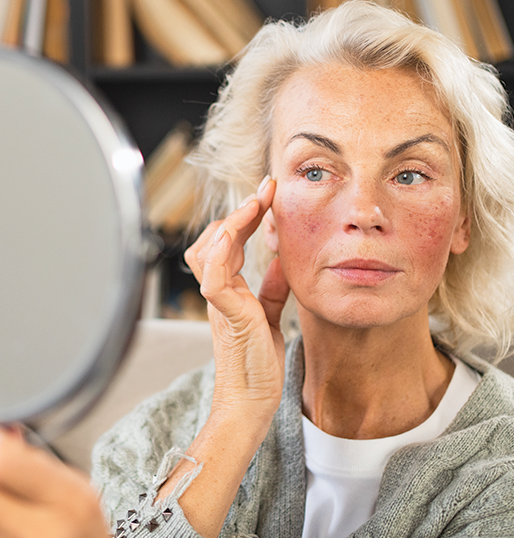

Rosacea is a common, chronic inflammatory skin condition that primarily affects the central face. It is characterized by persistent redness, flushing, visible blood vessels, and acne-like breakouts. Rosacea most often begins in adulthood (typically between the ages of 30 and 60), often runs in families, and affects both men and women.
Rosacea flares are frequently triggered by environmental and lifestyle factors such as sun exposure, heat, alcohol, spicy foods, stress, and smoking.
Symptoms vary widely from person to person. Some individuals experience occasional flushing triggered by specific exposures, while others develop persistent redness with permanently dilated blood vessels (telangiectasias). Rosacea flares may cause stinging, burning, or skin sensitivity. Papulopustular rosacea refers to acne-like bumps and pustules that appear on the cheeks and nose. With long-standing inflammation, some patients, more commonly men, may develop a thickened, enlarged appearance of the nose called rhinophyma.
More than half of patients with rosacea experience ocular (eye) involvement, which can cause dryness, irritation, redness, blurry vision, and a persistent gritty or foreign-body sensation.
Rosacea can be emotionally distressing and may impact self-confidence in both personal and professional settings.

Americans are affected by rosacea, often misdiagnosed as acne or sunburn

Of rosacea patients report low self-confidence as a result of their condition

Rosacea is a chronic vascular and inflammatory skin condition — triggers vary by patient

Identifying personal triggers plus professional treatment leads to lasting control
Rosacea is typically diagnosed with a careful medical history and exam of the affected areas. While rosacea is a chronic condition without a “cure,” a wide range of effective treatments can help control symptoms and reduce flares.
Daily sun protection is essential and includes using broad-spectrum SPF, wearing protective clothing, and seeking shade when outdoors. Keeping a food and lifestyle diary can help identify personal triggers. Because rosacea-prone skin is often sensitive, patients should use gentle cleansers and moisturizers and avoid harsh exfoliants, scrubs, and astringents.
Treatment is tailored to the individual and depends on the predominant symptoms. For flushing, topical medications can temporarily constrict blood vessels and are particularly helpful for anticipated social or professional events. Persistent redness and visible blood vessels respond well to vascular laser treatments. Acne-like flares may be treated with topical therapy. In more persistent cases or when ocular symptoms are present, oral medications may be recommended.
Our highly experienced team at Capital Skin & Laser offers the best in both medical and advanced procedural treatments to address all forms of rosacea.
Dr. Leah Spring completed advanced fellowship training in cosmetic dermatology, including laser and energy-based treatments. As part of our laser clinic, we offer treatment with the DermaV® laser, the most advanced vascular laser technology available. DermaV® effectively reduces persistent redness and visible blood vessels associated with rosacea.

“Dr. Spring was just fabulous to deal with. She listened intently and had a great personality to boot. I’m almost 82 years old, and my initial visit with her was one of the best experiences I have EVER had with any physician. I feel privileged to have her as my doctor, and I highly recommend her!!!”
“Dr. Spring was amazing. She explained everything thoroughly and respected my concerns.”
“Dr. Spring and her staff were upbeat, attentive, and caring. They saw my anxiety prior to my procedure and took an extra moment to talk through it with me, which made me feel like they care about me as a whole person. I’ve never felt anxious prior to treatment before so this extra step really hit home.”
“Kudos to Dr. Spring. She has the Eye of an Eagle, the Heart of a Lion, yet the Hand of a Woman! Best surgeon ever!”
“Baillie made me feel very comfortable and she was very thorough. She has a personality that makes one feel comfortable about being in a doctor’s office.”
“I was very impressed with Baillie Steele. She is knowledgeable and took the time to listen to me.”
“Baillie has brought personal care to a higher level. Her thoroughness and caring are exemplary.”






If you are experiencing persistent redness, flushing, or sensitivity associated with rosacea, schedule a consultation at Capital Skin & Laser. During your visit, we will evaluate your symptoms, identify potential triggers, and develop a personalized treatment plan tailored to your skin and lifestyle.
"*" indicates required fields
We're excited to welcome you to Capital Skin & Laser. You can now book your appointment online, anytime, from anywhere, and be among the first to experience our care.
Book Now